Water is something we use every single day — for drinking, cooking, bathing, and cleaning. But have you ever stopped to ask yourself: Is the water in my home truly safe and clean?
Even if your tap water looks clear, it can still contain contaminants that affect your health, your appliances, and even the taste of your food and beverages. In this comprehensive guide, you’ll learn exactly how to test the quality of water in your home, what the results mean, and what solutions are available if problems are detected.
Let’s dive in.
Why Testing Your Home’s Water Quality Is Important
Clean water is essential for good health. While municipal water systems are regulated, water quality can vary depending on:
- Local infrastructure
- Old plumbing systems
- Agricultural runoff
- Industrial pollution
- Natural mineral content
Contaminated or poor-quality water may contain:
- Heavy metals (lead, copper)
- Excess chlorine
- Nitrates
- Bacteria
- Hardness minerals (calcium and magnesium)
Testing your water gives you peace of mind and allows you to take action before small issues turn into serious problems.
Signs Your Water May Have Quality Issues
Before performing a formal test, your senses can often detect early warning signs.
Visual Signs
- Cloudy or milky appearance
- Brown, yellow, or rusty tint
- Floating particles
Odor
- Strong chlorine smell
- Rotten egg smell (sulfur)
- Metallic scent
Taste
- Bitter
- Metallic
- Unusually heavy or flat
If you notice any of these signs, it’s time to test your water immediately.
Main Methods to Test Water Quality at Home
There are three primary ways to check your water:
- Using a water test kit
- Sending a sample to a laboratory
- Installing an advanced filtration system with monitoring
Each option has its own benefits depending on your needs and budget.
Using a Water Test Kit
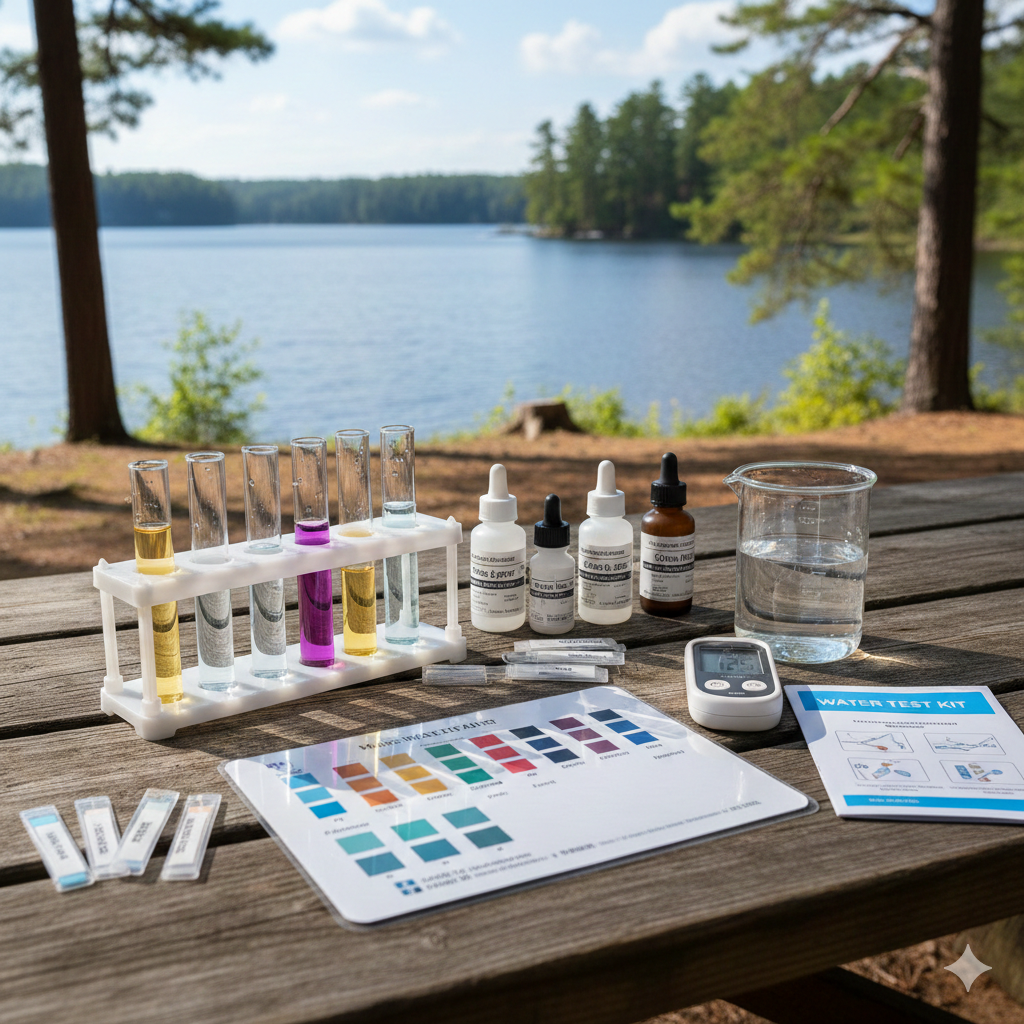
A water test kit is the fastest and most affordable way to check your water at home.
What Does It Test?
Most standard kits measure:
- pH levels
- Water hardness
- Chlorine
- Iron
- Nitrates
- Sometimes bacteria (advanced kits)
How to Use It
The process is simple:
- Collect a water sample in a clean container
- Dip the testing strip into the water
- Wait 30–60 seconds
- Compare the strip color to the provided chart
Results are immediate and easy to interpret.
Advantages
- Low cost
- Fast results
- No professional required
- Ideal for regular monitoring
Limitations
- Not as precise as lab testing
- May not detect all contaminants
Still, for most households, a water test kit is an excellent starting point.
Laboratory Water Testing
If you want a more detailed analysis, laboratory testing provides professional-grade accuracy.
When Should You Choose Lab Testing?
- If you use well water
- If your home has very old plumbing
- If you suspect heavy metal contamination
- If there is a baby or pregnant woman in the household
Lab tests can detect a wider range of contaminants and provide detailed concentration levels.
The downside? It costs more and takes longer to receive results.
Understanding Water Hardness
One of the most common household water issues is hard water.
Water hardness refers to the concentration of calcium and magnesium minerals dissolved in water.
Water Hardness Scale
| Hardness Level | mg/L CaCO3 | Classification |
|---|---|---|
| 0–60 | Soft | Ideal |
| 61–120 | Moderately Hard | Acceptable |
| 121–180 | Hard | Mineral buildup likely |
| 180+ | Very Hard | Treatment recommended |
Problems Caused by Hard Water
- Limescale buildup on faucets
- Reduced efficiency of water heaters
- Soap not lathering properly
- Dry skin and hair
- Shorter appliance lifespan
While hard water is generally not harmful to drink, it can become expensive over time due to appliance damage.
What Is Reverse Osmosis and How Does It Help?
A reverse osmosis system (RO) is one of the most effective water purification methods available for home use.
How Reverse Osmosis Works
Water passes through a semi-permeable membrane that blocks contaminants while allowing clean water to pass through.
RO systems remove:
- Heavy metals
- Nitrates
- Pesticides
- Chlorine
- Bacteria
- Dissolved solids
Advantages of Reverse Osmosis
- Extremely high purification level
- Improves taste and odor
- Reliable for drinking water
Disadvantages
- Higher upfront cost
- Requires filter and membrane maintenance
- Removes beneficial minerals (unless remineralization is included)
If your water test shows significant contamination, reverse osmosis may be the best long-term solution.
Comparing Water Testing & Treatment Options
Here’s a clear comparison:
| Method | Cost | Accuracy | Best For |
|---|---|---|---|
| Water Test Kit | Low | Moderate | Quick home testing |
| Laboratory Testing | High | Very High | Well water & serious concerns |
| Reverse Osmosis | Medium–High | Excellent purification | Drinking water treatment |
How Often Should You Test Your Water?
Regular testing ensures ongoing safety.
Recommended frequency:
- Once per year for municipal water
- Twice per year for well water
- After plumbing repairs
- If taste, smell, or color changes
Routine checks prevent surprises.
Practical Tips for Maintaining Water Quality
To keep your water clean:
- Replace filters on schedule
- Clean faucet aerators
- Avoid letting water sit stagnant
- Inspect old plumbing
- Flush pipes after long absences
Small habits make a big difference in long-term water safety.
Internal & External Resources
You may also find these helpful:
For scientific guidelines and standards, visit:
Frequently Asked Questions (FAQ)
Is tap water safe to drink?
In many areas, yes. However, water quality can vary depending on infrastructure and local conditions. Testing ensures safety.
How much does a water test kit cost?
Typically between $10 and $40, depending on the number of contaminants tested.
Does boiling water remove contaminants?
Boiling kills bacteria but does not remove heavy metals or mineral content.
Is hard water dangerous?
Not usually for health, but it can damage appliances and plumbing over time.
Do reverse osmosis systems remove beneficial minerals?
Yes, most RO systems remove nearly all dissolved solids. Some models include remineralization filters.
Conclusion
Testing the quality of water in your home is one of the smartest decisions you can make for your health and your household. Whether you choose a water test kit for quick monitoring, a laboratory analysis for detailed results, or invest in a reverse osmosis system for long-term purification, the key is taking action.
Clean water should never be left to chance. With the right knowledge and tools, you can ensure that every glass you drink is safe, fresh, and healthy for you and your family.
Start testing today — because knowing what’s in your water is the first step toward protecting your home.