Water is life. It keeps us healthy, grows our food, powers industries, and supports ecosystems worldwide. But not all water is safe to drink or use straight from nature. It can contain dirt, germs, chemicals, or even salt. That’s where water treatment methods—also known as water purification methods—come in. They’re the steps we take to make water clean, safe, and usable.
In this guide, you’ll discover the main types of water treatment. From basic techniques used for centuries to cutting-edge innovations like nanotechnology, you’ll get a solid understanding of how water is treated—and why it matters.
Let’s dive in!
🌊 Why Does Water Need to Be Treated?
Even water that looks clear can carry bacteria, viruses, pesticides, or heavy metals. Drinking or using untreated water can cause sickness, damage equipment, or harm the environment.
Water treatment helps:
- Produce clean drinking water
- Remove bad smells, colors, or tastes
- Prepare water for farms and factories
- Protect rivers, lakes, and oceans
If you’ve ever wondered how is water treated before reaching your tap, the answer depends on the water source and its end use.
🧪 1. Basic Treatment Steps
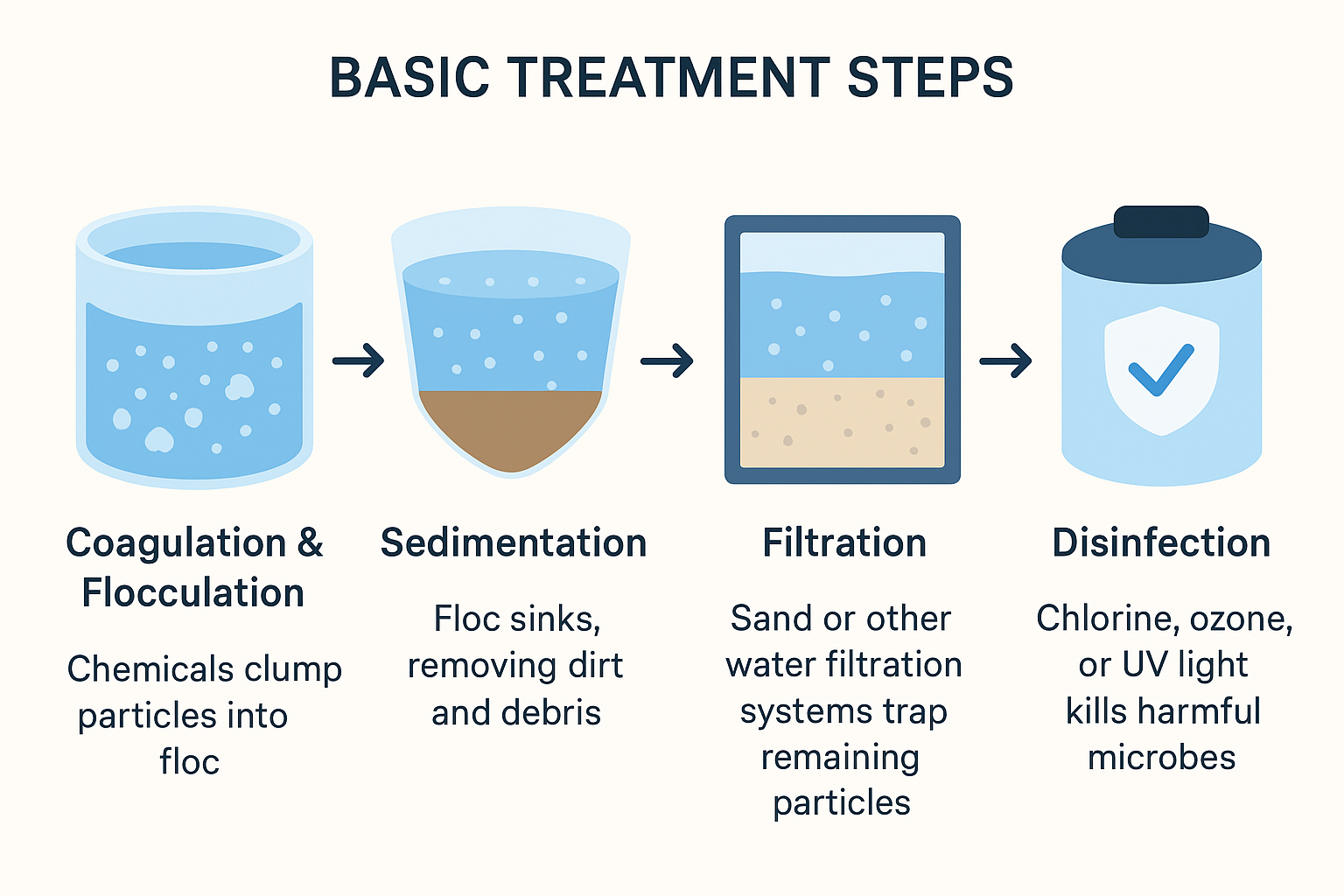
Most treatment plants use a tried-and-true sequence:
- Coagulation & Flocculation – Chemicals clump particles into floc.
- Sedimentation – Floc sinks, removing dirt and debris.
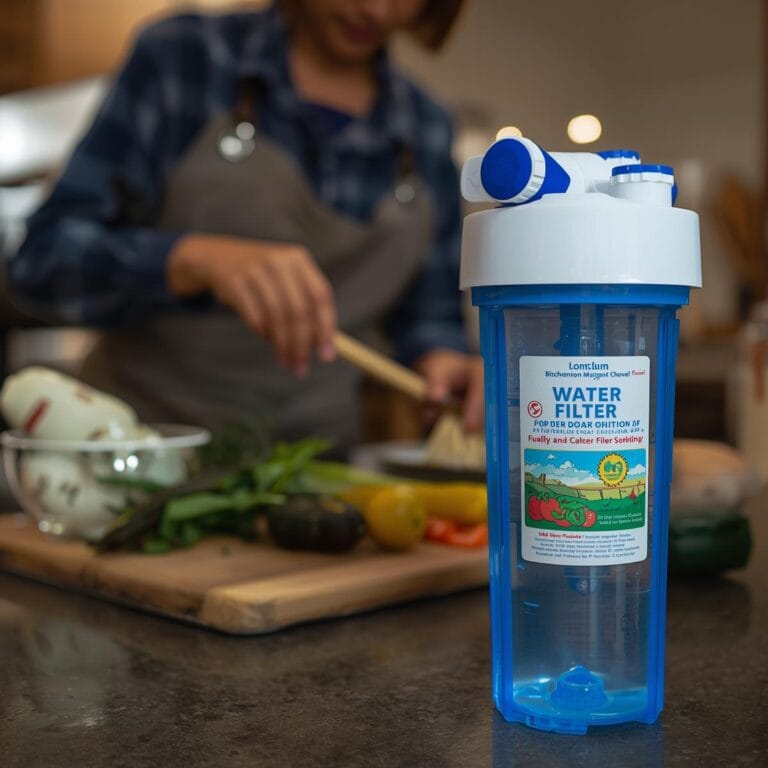
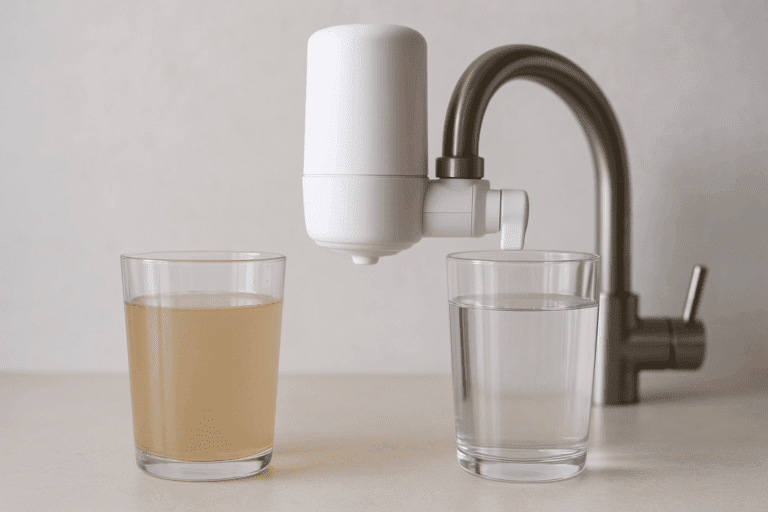
- Filtration – Sand or other water filtration systems trap remaining particles.
- Disinfection – Chlorine, ozone, or UV light kills harmful microbes.
These are the most common types of water treatment used globally to produce safe, clean drinking water.
🧱 2. Filtration Methods
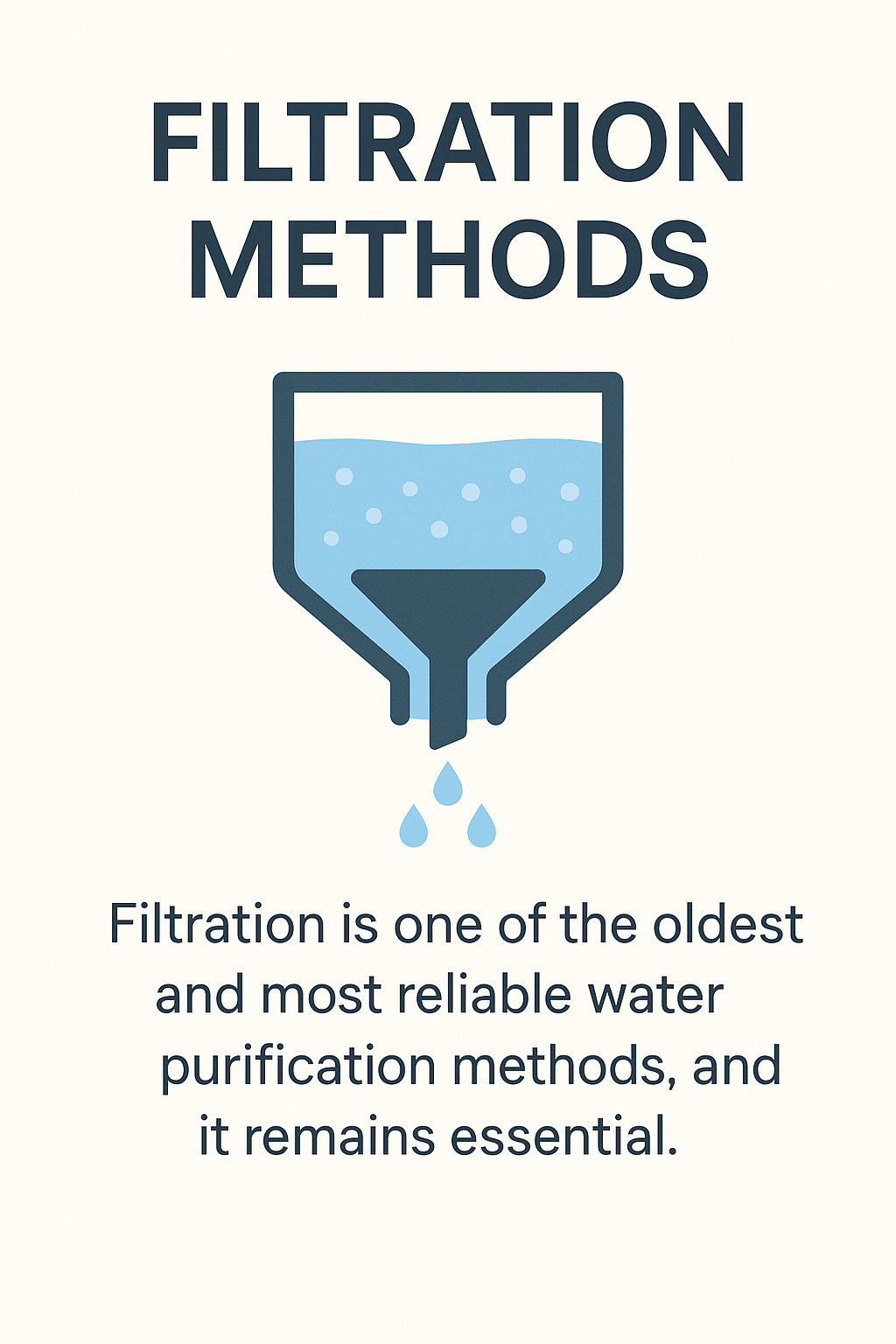
Filtration is one of the most cost-effective, and commonly used methods to purify water.
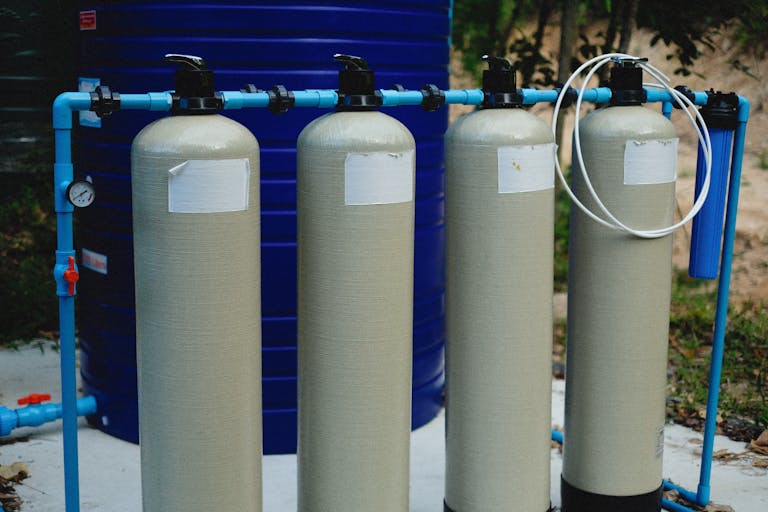
- Sand Filters – Trap dirt and microbes using layers of sand and gravel.
- Activated Carbon Filters – Remove odors, chlorine, and chemicals.
- Membrane Filters – High-tech sieves used in modern water filtration systems:
- Microfiltration (MF): Removes bacteria
- Ultrafiltration (UF): Blocks viruses
- Nanofiltration (NF): Filters out tiny chemicals
- Reverse Osmosis (RO): Removes salts and nearly everything else
🧴 3. Disinfection Methods
Killing germs is critical, which is why water disinfection methods are always included:
- Chlorination – Keeps water safe even as it travels through pipes.
- Ozone Treatment – Fast and powerful, leaving no taste or smell.
- Ultraviolet (UV) Light – Zaps microorganisms without chemicals.
- Advanced Oxidation – UV + peroxide or other combos break down hard-to-remove pollutants.
🔁 4. Ion Exchange & Water Softening
- Hard Water Problems – Too much calcium or magnesium causes scale and stains.
- Ion Exchange Systems – Swap hard minerals for sodium or potassium.
- Electrodeionization (EDI) – Uses electricity to produce ultra-pure water.
🌱 5. Natural & Biological Methods
Nature itself provides effective types of water treatment:
- Constructed Wetlands – Man-made wetlands that clean wastewater naturally.
- Biological Treatment – Helpful microbes break down waste in sewage plants.
- Algae Systems – Algae absorb nutrients and can be harvested for fertilizer or biofuel.
🌊 6. Desalination and Reverse Osmosis – Making Freshwater from Seawater
As freshwater becomes scarce, turning seawater into clean drinking water is vital.
- Why It Matters – Essential in dry, coastal regions.
- How It Works – Most plants use reverse osmosis (RO) to push seawater through membranes that block salt. Solar-powered desalination is emerging as a greener solution.
⚡ 7. Electric-Based Water Treatment
Some advanced systems use electricity instead of chemicals:
- Electrocoagulation – Electric current clumps pollutants.
- Capacitive Deionization (CDI) – Removes salts using charged carbon plates.
- Flow-Electrode CDI – Continuous and energy-efficient for lightly salty water.
🔬 8. Nanotechnology in Water Treatment
Nanotech is changing how water is treated:
- Nano-Filters – Remove viruses, metals, and microplastics.
- Nano-Materials – Graphene and nanotubes make filters stronger and longer-lasting.
- Solar Nanotech – Nanogels use sunlight to purify water.
🔁 9. Wastewater Treatment and Reuse
Wastewater treatment and reuse isn’t just disposal—it’s recovery:
- Reclaimed Water – Treated wastewater irrigates crops, recharges aquifers, or even becomes drinking water (already happening in Singapore and California).
- Resource Recovery – Extracts nutrients for fertilizer, captures biogas for energy, and reuses water sustainably.
🚀 10. Smart, Solar, and Future Tech
- Smart Water Systems – Sensors and AI detect leaks, adjust chemicals, and predict maintenance.
- Solar Water Purifiers – Portable systems for rural or disaster-hit areas.
- Automation & Machine Learning – Help plants run more efficiently with less energy.
💡 Choosing the Right Water Treatment
| Situation | Recommended Methods |
|---|---|
| Tap water from rivers | Coagulation → Filtration → Disinfection |
| Salty seawater | Desalination and Reverse Osmosis |
| Hard water at home | Ion Exchange Softener |
| Wastewater in cities | Biological Treatment + Membrane Filtration |
| Emergency zones | Portable UV or Solar Filters |
🌍 The Future of Water Treatment
Water treatment is becoming:
- Smarter with AI
- Cleaner with green energy
- More inclusive with off-grid solutions
- More circular, through wastewater treatment and reuse
🧾 Final Thoughts
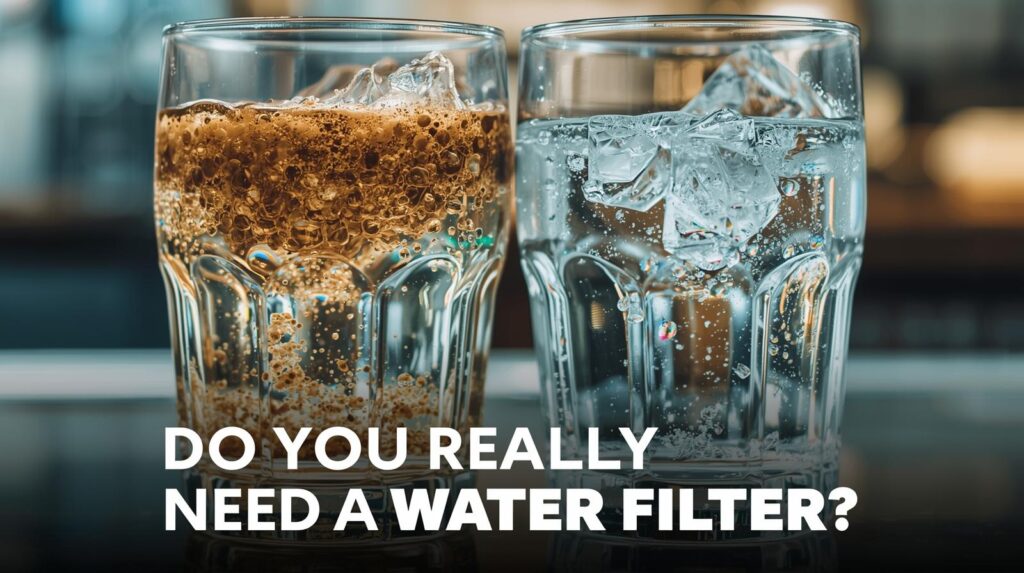
Water treatment methods may sound technical, but their purpose is simple: keep people safe, protect nature, and use water wisely.
From simple sand filters to advanced desalination and reverse osmosis plants, and from natural wetlands to modern wastewater treatment and reuse programs, every drop matters.
Thanks for reading—stay curious, and stay hydrated! 💙