Lead in Drinking Water Health Risks, Scientific Evidence, and Effective Filtration Solutions
Introduction
Lead in drinking water remains one of the most critical environmental health threats affecting communities worldwide. Despite advances in water treatment infrastructure, aging pipes, industrial contamination, and corrosion in plumbing systems continue to expose millions of households to dangerous levels of lead.
Lead is a toxic heavy metal that accumulates in the human body over time. Even very low concentrations can cause severe health problems, particularly for children, infants, and pregnant women. Because lead is colorless, tasteless, and odorless in water, contamination often goes unnoticed until testing reveals elevated levels.
Global health authorities, including the World Health Organization and the United States Environmental Protection Agency, have repeatedly warned that no level of lead exposure is considered completely safe.
In this comprehensive guide, we examine how lead enters drinking water, the scientific mechanisms of toxicity, and the most effective filtration solutions available today.
Clear Answer (Featured Snippet)
Lead enters drinking water primarily through corrosion of plumbing materials such as lead pipes, solder, and brass fixtures. When water remains in contact with these materials, lead particles dissolve and contaminate the water supply. Consuming contaminated water can cause neurological damage, developmental delays in children, cardiovascular problems in adults, and kidney damage. The most effective prevention strategies include testing water regularly, replacing lead plumbing, and using certified filtration systems such as reverse osmosis or activated carbon filters.
Scientific Explanation
What Is Lead and Why Is It Dangerous?
Lead (Pb) is a naturally occurring heavy metal historically used in plumbing, paint, gasoline, and industrial products. While its industrial applications were once widespread, decades of research have confirmed its severe toxicity to humans.
Unlike many contaminants that the body can eliminate, lead accumulates in bones, tissues, and organs, remaining in the body for decades.
How Lead Enters Drinking Water
Lead rarely originates from natural water sources. Instead, contamination usually occurs within the distribution system or household plumbing.
Common sources include:
- Lead service lines
- Lead-containing solder used in plumbing
- Brass faucets and fixtures
- Corroded pipes in older buildings
When water is acidic or low in mineral content, corrosion becomes more likely, allowing lead particles to dissolve into the water supply.
Biological Mechanism of Lead Toxicity
Lead interferes with multiple biological processes:
- Neurological disruption
Lead mimics calcium, allowing it to enter neurons and interfere with neurotransmitter signaling. - Enzyme inhibition
Lead blocks enzymes necessary for hemoglobin production, leading to anemia. - Oxidative stress
The metal promotes cellular damage through free radical formation. - Kidney toxicity
Chronic exposure damages renal filtration structures.
Health Effects by Age Group
| Population Group | Health Effects |
|---|---|
| Infants & Children | Brain development impairment, reduced IQ, behavioral disorders |
| Pregnant Women | Increased risk of miscarriage and fetal development problems |
| Adults | Hypertension, kidney disease, reproductive issues |
| Elderly | Cardiovascular complications and cognitive decline |
The Centers for Disease Control and Prevention reports that children exposed to lead can experience permanent neurological damage even at very low concentrations.
Practical Advice for Households
Reducing exposure to lead in drinking water requires proactive monitoring and prevention strategies.
Test Your Water
Water testing is the first and most critical step in identifying contamination.
Options include:
- Certified laboratory testing
- EPA-approved home test kits
- Municipal water quality reports
Flush Pipes Before Use
If water has been sitting in pipes for more than 6 hours, run the tap for 30–60 seconds before drinking or cooking.
This helps remove water that may contain higher lead concentrations.
Use Cold Water for Consumption
Hot water dissolves lead more easily.
Always use cold tap water for drinking, cooking, and preparing infant formula.
Clean Faucet Aerators
Small lead particles often accumulate in faucet aerators. Cleaning them regularly reduces contamination risk.
Filtration Solutions
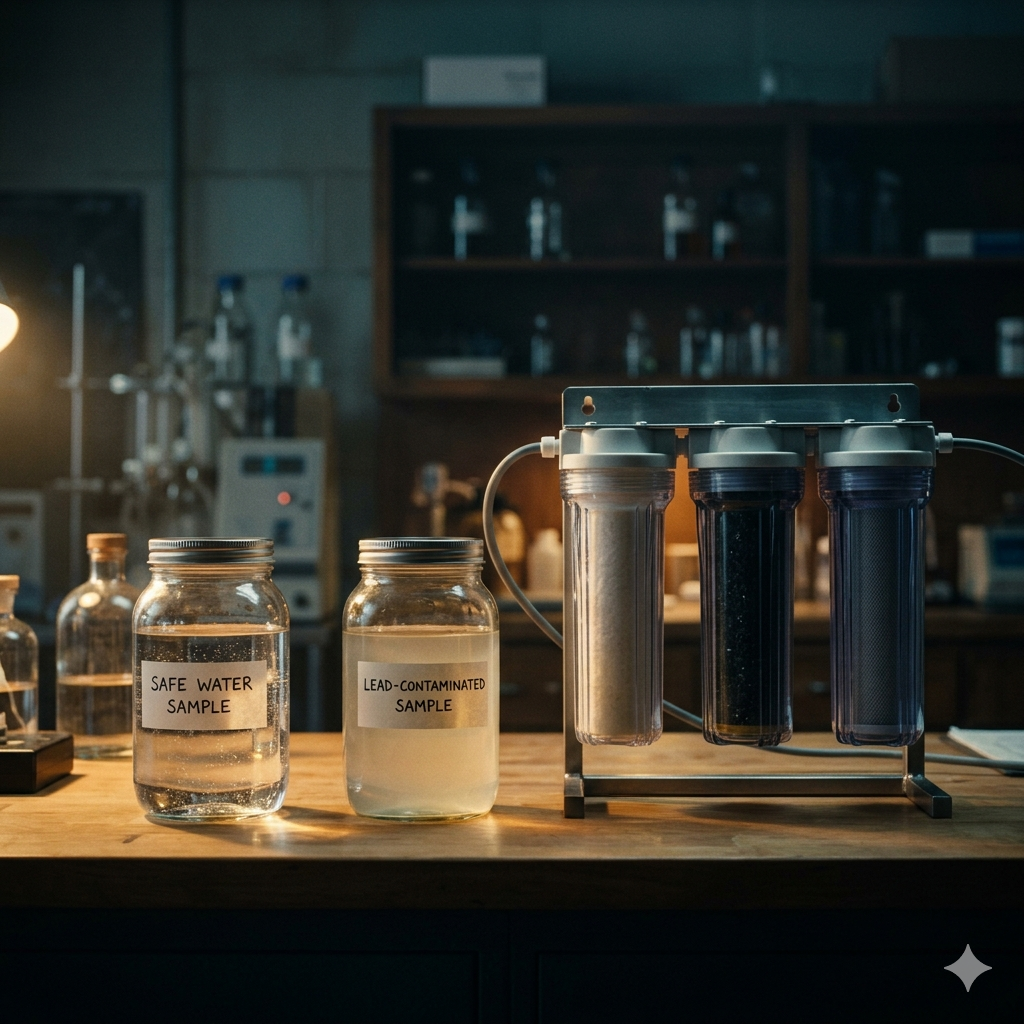
Advanced filtration systems can dramatically reduce lead levels in drinking water.
Comparison of Filtration Technologies
| Filtration Method | Lead Removal Efficiency | Cost | Maintenance |
|---|---|---|---|
| Reverse Osmosis (RO) | 95–99% | High | Moderate |
| Activated Carbon Filters | 85–95% | Low–Moderate | Easy |
| Distillation Systems | 99% | High | Moderate |
| Ion Exchange Filters | 90–95% | Moderate | Moderate |
Reverse Osmosis Systems
Reverse osmosis is considered the most effective residential water purification technology.
Benefits:
- Removes lead, arsenic, nitrates, and bacteria
- Produces highly purified drinking water
- Long-term reliability
Activated Carbon Filters
High-quality carbon filters certified under NSF/ANSI Standard 53 effectively remove lead particles.
These filters are commonly found in:
- Pitcher filters
- Faucet-mounted units
- Under-sink systems
Whole-House Filtration
For homes with older plumbing, whole-house filtration systems offer an additional layer of protection by treating water before it enters the home.
Frequently Asked Questions (FAQ)
Is lead in drinking water visible?
No. Lead is completely invisible in water. It has no color, taste, or smell, which makes laboratory testing essential.
How common is lead contamination?
Millions of homes worldwide still contain lead service lines or lead-containing plumbing components, especially buildings constructed before the 1980s.
Can boiling water remove lead?
No. Boiling water does not remove lead. In fact, boiling may increase lead concentration because water evaporates while the metal remains.
What level of lead is considered safe?
The World Health Organization states that there is no safe level of lead exposure, particularly for children.
However, regulatory guidelines exist:
| Organization | Maximum Recommended Level |
|---|---|
| United States Environmental Protection Agency | 15 ppb (action level) |
| World Health Organization | 10 ppb guideline |
Should bottled water be used instead?
Bottled water can temporarily reduce exposure, but long-term solutions involve filtration or pipe replacement.
Global Public Health Perspective
Lead contamination in water systems has gained global attention due to several high-profile incidents.
One of the most widely known crises occurred during the Flint water contamination event, where improper water treatment caused lead to leach from aging pipes into municipal water supplies.
Public health agencies including:
- World Health Organization
- United States Environmental Protection Agency
- Centers for Disease Control and Prevention
have since intensified efforts to strengthen water safety standards, infrastructure replacement programs, and public awareness campaigns.
Statistics on Lead Exposure
Recent research highlights the scale of the issue.
| Statistic | Source |
|---|---|
| Over 800 million children globally have elevated blood lead levels | Global health studies |
| Approximately 6–10 million lead service lines remain in the United States | Infrastructure reports |
| Lead exposure contributes to more than 1 million deaths annually worldwide | Global health assessments |
These figures demonstrate that lead contamination remains a major environmental health challenge.
Long-Term Solutions
While filtration systems provide immediate protection, permanent solutions require infrastructure improvements.
Key long-term strategies include:
- Replacing lead service lines
- Upgrading municipal water treatment systems
- Improving corrosion control methods
- Implementing stricter plumbing regulations
Governments worldwide are investing billions of dollars to modernize water infrastructure and eliminate lead exposure risks.
Conclusion
Lead in drinking water represents a preventable yet persistent public health threat. Although modern water treatment systems have significantly reduced contamination, aging infrastructure and outdated plumbing materials continue to expose millions of households.
By testing water regularly, adopting certified filtration technologies, and supporting infrastructure upgrades, communities can dramatically reduce lead exposure risks.
Protecting drinking water quality is essential not only for individual households but also for long-term public health and environmental sustainability.