Nitrates in Drinking Water: Health Risks, Safe Limits, and Filtration Solutions
Introduction to Nitrates in Drinking Water
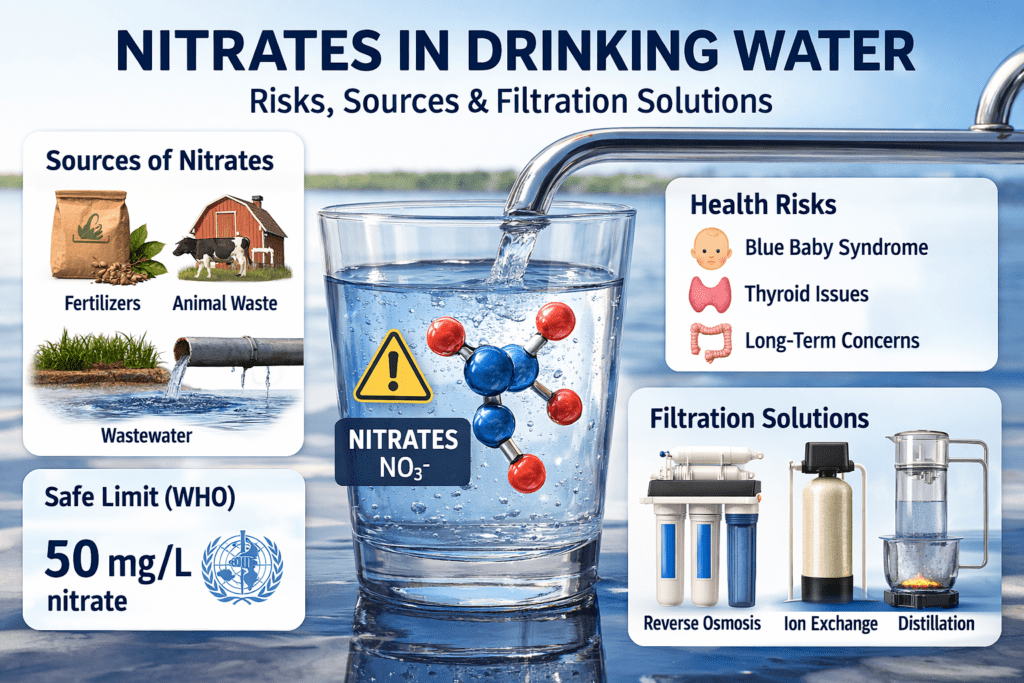
Water is often described as the most essential resource for life. We drink it every day without thinking much about what might be dissolved in it. Yet in many regions around the world, nitrates in drinking water have become one of the most widespread environmental contaminants. These invisible compounds, primarily originating from agricultural fertilizers, livestock waste, and wastewater runoff, are increasingly being detected in groundwater and municipal water systems.
While small amounts of nitrates occur naturally, elevated concentrations can pose significant health risks, particularly for infants and pregnant women. Modern agricultural practices have dramatically increased the amount of nitrogen-based fertilizers used globally, and a portion of that nitrogen inevitably finds its way into rivers, lakes, and underground aquifers. Once nitrates enter these water sources, they can persist for years or even decades.
Research indicates that nitrate pollution is not just a localized issue. In the United States alone, nearly 60 million people are exposed to detectable nitrate levels in their drinking water systems. This widespread exposure highlights the importance of understanding what nitrates are, why they appear in water supplies, and how to remove them effectively.
Understanding the science and solutions behind nitrate contamination empowers consumers to protect themselves and their families. From recognizing safe limits to choosing the right filtration technology, informed decisions can dramatically improve water quality at home.
If you’re interested in other contaminants commonly found in tap water, you may also want to explore this related guide on heavy metals:
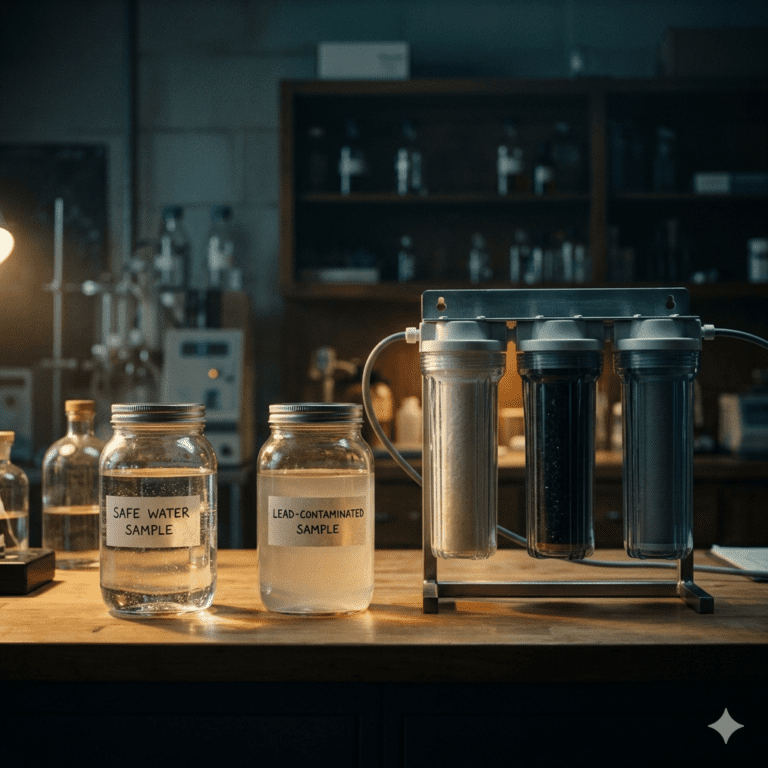
Most people assume their tap water is safe. However, harmful heavy metals in drinking water are more common than you might think.
Clear Answer – What Are Nitrates and Why Are They Dangerous?
In simple terms, nitrates are chemical compounds made of nitrogen and oxygen that naturally occur in soil, water, and plants. They are essential nutrients for plant growth, which is why they are widely used in fertilizers. However, when nitrates accumulate in drinking water above certain levels, they can become dangerous to human health.
The primary concern with nitrates in water is their ability to interfere with oxygen transport in the bloodstream. When consumed, nitrates can convert into nitrites in the body. These nitrites can then react with hemoglobin in the blood, reducing its ability to carry oxygen. In infants, this condition is known as methemoglobinemia, or “blue baby syndrome,” which can be life-threatening if untreated.
Health authorities have therefore established safety thresholds. The widely accepted guideline from international health organizations is 50 mg/L of nitrate in drinking water, which equals 10 mg/L when measured as nitrate-nitrogen. These limits are designed primarily to protect infants, who are the most vulnerable to nitrate toxicity.
Although most municipal water systems remain within legal limits, emerging research suggests that long-term exposure to lower nitrate concentrations may still be linked to health problems such as thyroid disorders, colorectal cancer, and reproductive issues. These findings have sparked ongoing debate among scientists and policymakers about whether existing regulations are sufficiently protective.
Ultimately, nitrates are not inherently harmful at low concentrations, but elevated levels can create serious public health risks. That is why regular water testing, effective filtration technologies, and improved agricultural practices are crucial in preventing contamination.
Scientific Explanation of Nitrate Contamination
What Are Nitrates?
Nitrates are part of the nitrogen cycle, a natural process that moves nitrogen between the atmosphere, soil, water, and living organisms. Plants absorb nitrates from soil as nutrients, animals consume those plants, and microorganisms break down organic matter back into nitrogen compounds.
In nature, nitrate levels in groundwater are typically very low, often less than 1 mg/L. When concentrations rise above this level, it usually indicates human-related contamination. Agricultural fertilizers, manure from livestock farms, septic system leaks, and wastewater discharges are the most common sources.
The problem arises because nitrates dissolve easily in water and do not attach strongly to soil particles. Rainfall or irrigation can wash them deep into groundwater supplies, where they remain stable and difficult to remove without specialized treatment.
This mobility makes nitrates one of the most challenging water pollutants to manage. Unlike many other contaminants, boiling water does not remove nitrates—in fact, boiling can increase their concentration as water evaporates.
How Nitrates Enter Drinking Water
There are several pathways through which nitrates enter drinking water systems:
- Agricultural runoff: Fertilizers used on crops wash into rivers and groundwater.
- Animal waste: Livestock manure can release nitrogen compounds into soil and water.
- Septic systems: Leaking or poorly maintained septic tanks can contaminate groundwater.
- Urban runoff: Stormwater can carry nitrogen pollutants from streets and lawns.
Among these sources, agriculture is the dominant contributor worldwide. Modern farming relies heavily on nitrogen fertilizers to increase crop yields, but a significant percentage of applied nitrogen never reaches the plants. Instead, it leaches into nearby water sources.
Because groundwater moves slowly, contamination can persist long after the original pollution source is removed. Some aquifers may take decades to recover from nitrate pollution.
Global Standards and Safety Limits
International organizations have established guidelines to protect public health from nitrate exposure. The most widely referenced standard comes from the World Health Organization, which sets a guideline value of 50 mg/L nitrate in drinking water.
Different countries adopt similar or slightly stricter standards depending on local conditions. In many parts of Europe, for example, the same 50 mg/L limit is enforced for municipal drinking water supplies.
| Organization / Country | Nitrate Limit |
|---|---|
| World Health Organization | 50 mg/L |
| European Union | 50 mg/L |
| United States EPA | 10 mg/L as nitrate-nitrogen |
| Switzerland | 25 mg/L recommended |
These limits are designed primarily to prevent acute health risks, particularly for infants. However, as research evolves, some experts advocate lowering these limits to provide additional protection against long-term health effects.
Health Effects of Nitrates in Drinking Water
Blue Baby Syndrome
The most well-known health risk associated with nitrate exposure is methemoglobinemia, commonly called blue baby syndrome. This condition occurs when nitrates convert into nitrites in the digestive system and interfere with hemoglobin’s ability to carry oxygen.
Infants younger than six months are particularly vulnerable because their digestive systems convert nitrates into nitrites more readily than adults. Without enough oxygen in their bloodstream, affected infants may develop symptoms such as bluish skin coloration, fatigue, and breathing difficulties.
Historically, outbreaks of blue baby syndrome were linked to well water contaminated with agricultural runoff. These cases prompted governments to establish strict nitrate limits in drinking water.
Long-Term Health Concerns
Beyond acute poisoning, scientists are increasingly investigating the long-term health effects of nitrate exposure. Some studies suggest associations between chronic nitrate consumption and conditions such as:
- Colorectal cancer
- Thyroid dysfunction
- Birth defects
- Pregnancy complications
These risks appear to arise from the formation of N-nitroso compounds, potentially carcinogenic substances produced when nitrates interact with proteins in the digestive system.
Although the evidence is still evolving, many researchers believe that current regulatory limits may not fully account for these long-term risks.
Global Statistics and Trends
Nitrate contamination is widespread and growing due to intensive agriculture and population expansion. Several recent studies and environmental monitoring programs have highlighted concerning trends.
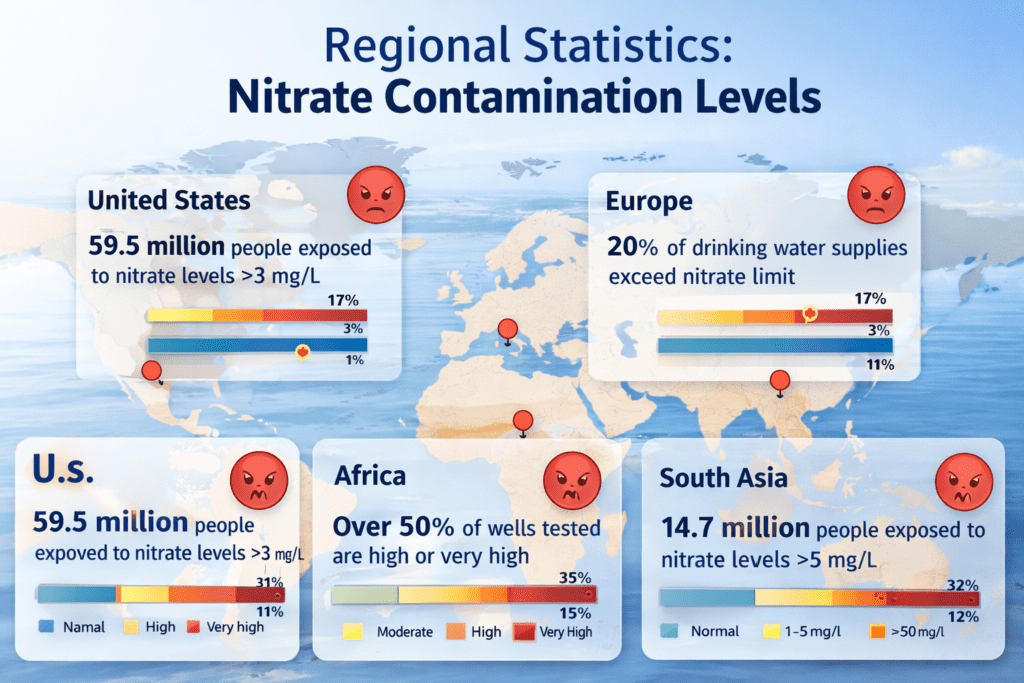
One analysis of drinking water systems found that 59.5 million people in major U.S. cities were exposed to nitrate levels above 3 mg/L, indicating human-caused contamination. Even though this level is below the legal limit, it signals potential pollution that could worsen over time.
Another study reviewing national groundwater surveys estimated that about 58% of the population using public water supplies is exposed to nitrate concentrations above 1.3 mg/L. While these levels are generally considered safe, they illustrate how common nitrate contamination has become.
In agricultural regions, nitrate levels may occasionally approach or exceed regulatory thresholds. Water utilities often must blend water from different sources or install advanced treatment systems to maintain compliance with safety standards.
These statistics emphasize the importance of proactive monitoring and pollution prevention strategies. As global food demand continues to rise, balancing agricultural productivity with environmental protection will remain a major challenge.
Practical Advice to Reduce Exposure
Protecting your household from nitrate contamination does not always require complex solutions. In many cases, simple awareness and preventative measures can significantly reduce risk.
First, homeowners relying on private wells should test their water regularly. Unlike municipal systems, private wells are not always monitored by government authorities. Testing every one to two years can detect contamination early and allow corrective action before levels become dangerous.
Second, families with infants should be particularly cautious when preparing baby formula. If nitrate levels in water exceed recommended limits, bottled water labeled as low-nitrate or purified water should be used instead.
Third, maintaining septic systems and reducing fertilizer use around homes can help minimize nitrate runoff into groundwater. Small actions taken at the household level contribute to larger environmental improvements.
Understanding other potential contaminants in tap water can also help you make informed decisions about filtration and treatment methods. For instance, many households also face issues related to heavy metals in tap water.
Filtration Solutions for Removing Nitrates
Removing nitrates from water requires specialized filtration methods because common treatments like boiling or simple carbon filters are ineffective. The most reliable technologies include reverse osmosis, ion exchange, and distillation.
Reverse Osmosis
Reverse osmosis (RO) is one of the most effective methods for removing nitrates from drinking water. The process forces water through a semi-permeable membrane that blocks dissolved contaminants while allowing clean water molecules to pass through.
RO systems are widely used in residential filtration systems and can remove up to 90–95% of nitrates, along with many other contaminants such as heavy metals and pesticides.
Ion Exchange Systems
Ion exchange technology works by replacing nitrate ions in water with harmless chloride ions. Specialized resins attract nitrate molecules and trap them inside the filter media.
This method is commonly used in large municipal treatment plants as well as certain household filtration systems.
Distillation
Distillation removes nitrates by heating water until it evaporates and then condensing the purified vapor. Because nitrates do not evaporate with the water, they remain behind in the boiling chamber.
Although highly effective, distillation systems are slower and more energy-intensive than other filtration methods.
Comparing Water Filtration Methods
| Filtration Method | Nitrate Removal Efficiency | Advantages | Limitations |
|---|---|---|---|
| Reverse Osmosis | 90–95% | Highly effective, widely available | Produces wastewater |
| Ion Exchange | 80–90% | Efficient for large systems | Requires maintenance |
| Distillation | 95–99% | Extremely pure water | Energy intensive |
Each method has its strengths and trade-offs. Choosing the right system depends on factors such as water quality, household size, and budget.
Monitoring and Testing Your Water
Testing is the only reliable way to determine nitrate levels in drinking water. Certified laboratories and water quality testing kits can measure concentrations accurately.
Public water utilities regularly test for nitrates and provide water quality reports to residents. If you rely on a private well, testing becomes even more critical because contamination may go unnoticed without regular monitoring.
When reviewing test results, it is important to check whether nitrate levels are reported as nitrate (NO3) or nitrate-nitrogen (NO3-N). The acceptable limits differ depending on the measurement method.
Regional Statistics: Nitrate Contamination Levels
While the WHO sets a global limit, the actual prevalence of nitrates varies significantly by region due to agricultural intensity and geological factors. Below are the latest statistics and trends for key regions.
1. United States (USA)
- Prevalence: According to the USGS, nitrates are the most common contaminant in outdoor wells.
- Statistics: Approximately 4.3 million people in the U.S. use private wells that exceed the federal limit of 10 mg/L (as Nitrogen).
- Hotspots: The “Corn Belt” (Iowa, Illinois, Nebraska) shows the highest concentrations, with some areas reporting levels 2–3 times above the safety limit due to intensive fertilizer use.
2. United Kingdom (UK)
- Current State: Around 14% of groundwater bodies in England currently exceed the 50 mg/L threshold.
- Trends: In some agricultural catchments in East Anglia, nitrate levels have been rising steadily over the last 20 years, necessitating multi-million pound investments in blending and treatment by water companies.
3. Germany
- Legal Challenges: Germany has faced legal action from the European Court of Justice for failing to curb nitrate levels.
- Statistics: Approximately 27% of groundwater monitoring points exceed the EU limit of 50 mg/L.
- Impact: Over 50% of Germany’s land is used for agriculture, which is the primary driver of these elevated levels.
4. France
- National Issue: France is one of the largest agricultural producers in the EU, leading to significant nitrate leaching.
- Statistics: An estimated 2 million people in France live in areas where the water supply occasionally or regularly exceeds the 50 mg/L limit.
- Regional Focus: Brittany is the most affected region due to high-density livestock farming and pig manure management issues.
5. Greece
- Critical Areas: Greece has designated several “Nitrate Vulnerable Zones” (NVZs) under the EU Nitrates Directive.
- Statistics: In the plains of Thessaly and Argolis, nitrate levels in groundwater have been recorded as high as 80-150 mg/L, significantly above safety limits.
- Sources: Intensive cotton and tobacco farming, combined with over-pumping of aquifers (which concentrates pollutants), are the main causes.
- Recent Data: Approximately 15-20% of groundwater samples in agricultural zones exceed the 50 mg/L limit.
Comparative Table: Nitrate Contamination by Region
| Country | Percentage of “Vulnerable” Groundwater | Primary Source of Nitrates | Regulatory Status |
|---|---|---|---|
| USA | ~10% of private wells | Chemical Fertilizer | Federal MCL: 10 mg/L (as N) |
| Germany | ~27% of monitoring points | Livestock Manure / Fertilizer | Strict EU Nitrates Directive |
| France | ~15% of agricultural zones | Pig Farming / Crops | High Monitoring Activity |
| UK | ~14% of groundwater bodies | Arable Farming | Post-Brexit Water Regulations |
| Greece | ~20% in agricultural plains | Cotton/Corn Irrigation | Nitrate Vulnerable Zones (NVZs) |
Updated Article Inclusion
These statistics can be seamlessly integrated into Section 7 of your main article to provide local relevance for readers in these countries.
How this affects the SEO
By including specific data for Greece, USA, and EU countries, you increase the “Geographic Relevance” of the content, which helps in ranking for localized searches such as “nitrates in drinking water Greece” or “nitrate limits Germany.”
The Role of International Organizations
Global health and environmental organizations play a key role in establishing water quality standards and promoting research on nitrate contamination.
The World Health Organization (WHO) provides widely recognized guidelines for drinking water safety, including the recommended nitrate limit of 50 mg/L. These guidelines are used by many countries when setting national regulations.
Environmental agencies and research institutions continue to monitor nitrate pollution trends and investigate potential health effects. Their work helps policymakers update safety standards and develop strategies to protect public health.
Conclusion
Nitrate contamination in drinking water is a complex issue that combines environmental science, agriculture, public health, and water treatment technology. While nitrates are naturally occurring compounds essential for plant growth, excessive concentrations in drinking water can pose serious risks—especially for infants and vulnerable populations.
Global guidelines such as the 50 mg/L nitrate limit help reduce immediate health threats like blue baby syndrome. Yet emerging research suggests that long-term exposure to lower levels may still have health consequences, highlighting the need for ongoing monitoring and improved water management practices.
For individuals, the best defense is awareness. Testing your water, understanding contamination sources, and installing effective filtration systems can dramatically reduce exposure. As communities and governments continue to address nitrate pollution at its source, these personal measures remain a critical line of protection.
FAQ – Nitrates in Drinking Water
1. What level of nitrates in drinking water is considered safe?
Most international guidelines recommend a maximum of 50 mg/L nitrate or 10 mg/L nitrate-nitrogen in drinking water to protect infants and vulnerable populations.
2. Can boiling water remove nitrates?
No. Boiling water actually concentrates nitrates because water evaporates while nitrates remain behind.
3. What is the main source of nitrate contamination?
The largest contributor is agricultural runoff, especially from nitrogen-based fertilizers and livestock manure.
4. Which filtration system removes nitrates best?
Reverse osmosis is generally considered the most effective household solution, removing up to 95% of nitrates.
5. Should private well owners test their water for nitrates?
Yes. Private wells should be tested every 1–2 years, especially if infants or pregnant women live in the household.